.svg)



Investment managers now have a set of key indicators to monitor the viability of their products over time, according to research from Rainmaker Information’s latest ETP Report.
Products that meet these three conditions are 8.9 times more likely to be terminated over five years:
For products that sit above these criteria, the termination rate within five years is 4.4% compared to 39.1% for those within the criteria.
“Weak tradability becomes economically relevant to investment managers when there is long-term tradability and value concerns,” said David Gallagher, executive director of research at Rainmaker Information.
“We do not claim that weak tradability causes termination, but between this and higher spreads, these should be considered the early flags that managers need to address.”
The ETP landscape in Australia has continued to mature, with total funds under management in ETPs sitting at over $260 billion as at 30 September 2025, a growth of 75% since September 2023.
Similarly the number of products continues to rise, with a 26% growth over two years, seeing the number of products increase from 304 to 384.
“Given the increased competition in the market, when exposure and fees are similar, investor outcomes increasingly rely on the execution from managers.”
“Products that lose attention often face widening spreads and deteriorating depth., therefore persistent weak tradability is not just a temporary inconvenience; it can influence sizing decisions, rebalancing, and investor confidence over time,” said Gallagher.
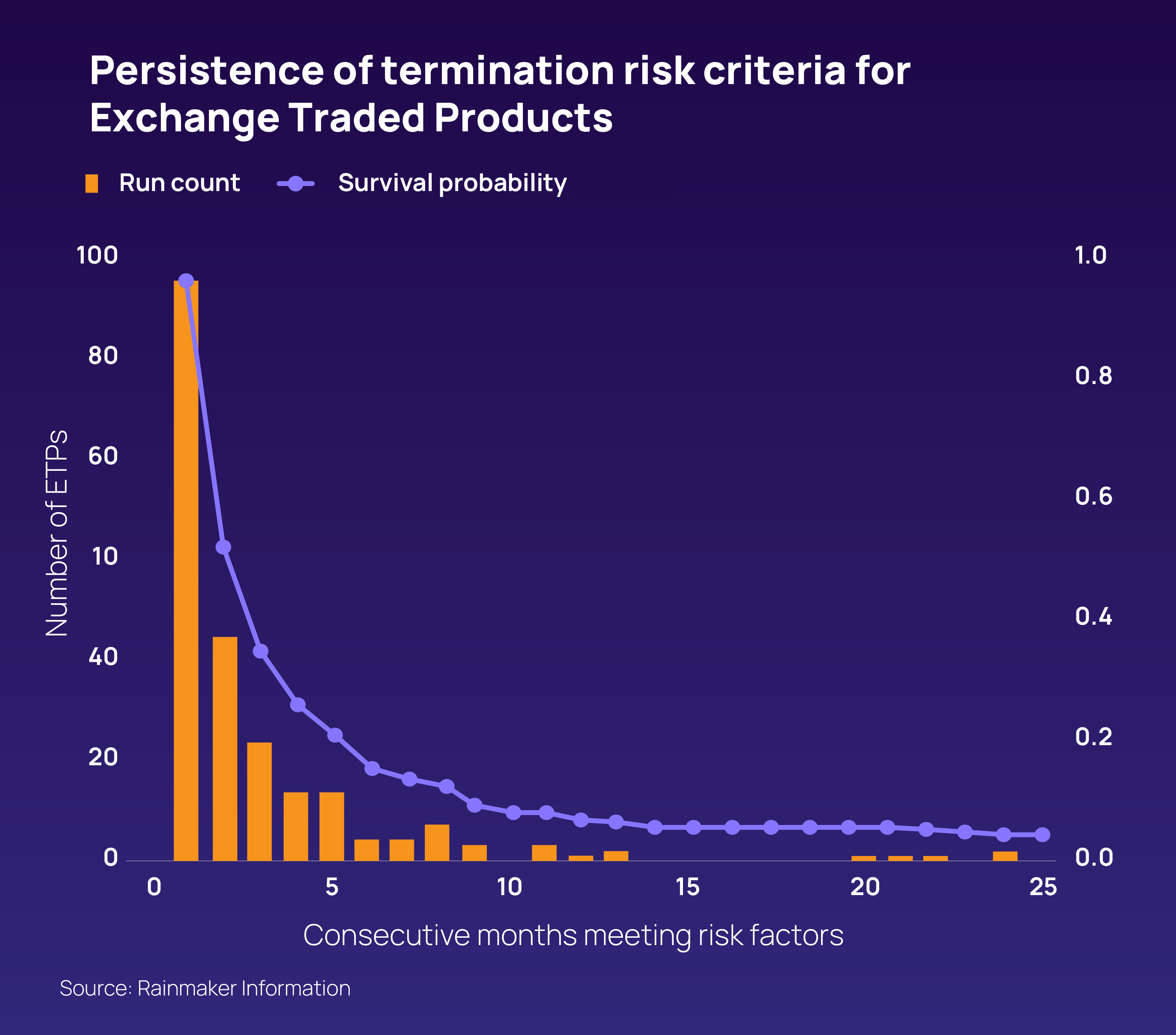
The number of products that meet these negative thresholds for a single month at a given time are over two times more frequent than the products that meet these conditions for two consecutive months, and the frequency of four consecutive months is near 20 times less common.
“For managers, it’s important to know that these challenges can, and are, being overcome.”
"A single month is an alert, not a diagnosis,” said Gallagher.
Contact our Business Development team to receive further details of Rainmaker's products and services.

Internally managed assets have more than doubled in five years—rising from an estimated $227 billion in 2020 to $550 billion in 2025.

Australian ETP market records $51.9 billion in net flows for 2025, up 60% year-on-year

